
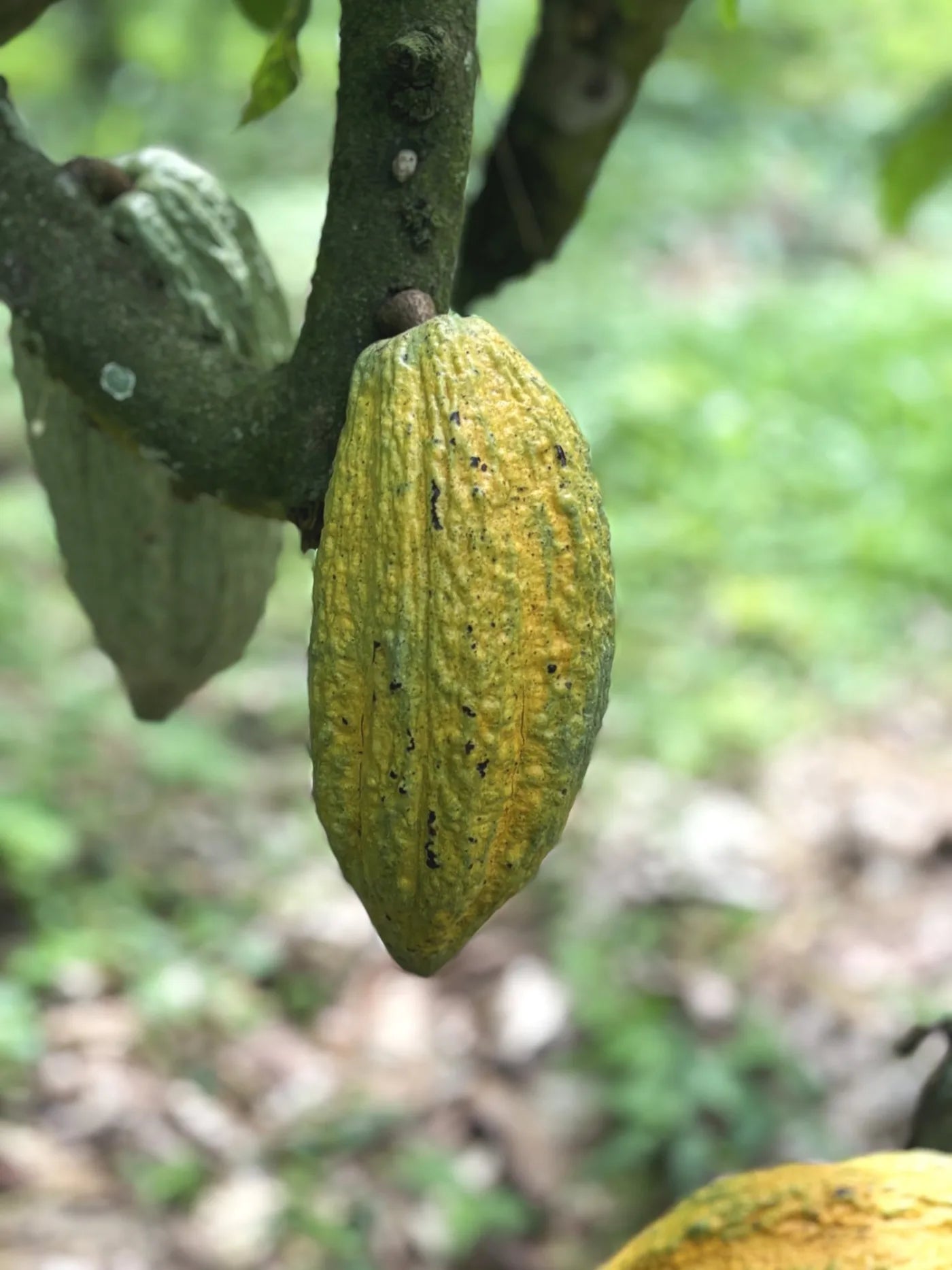
Grown in Ghana. Crafted with purpose.
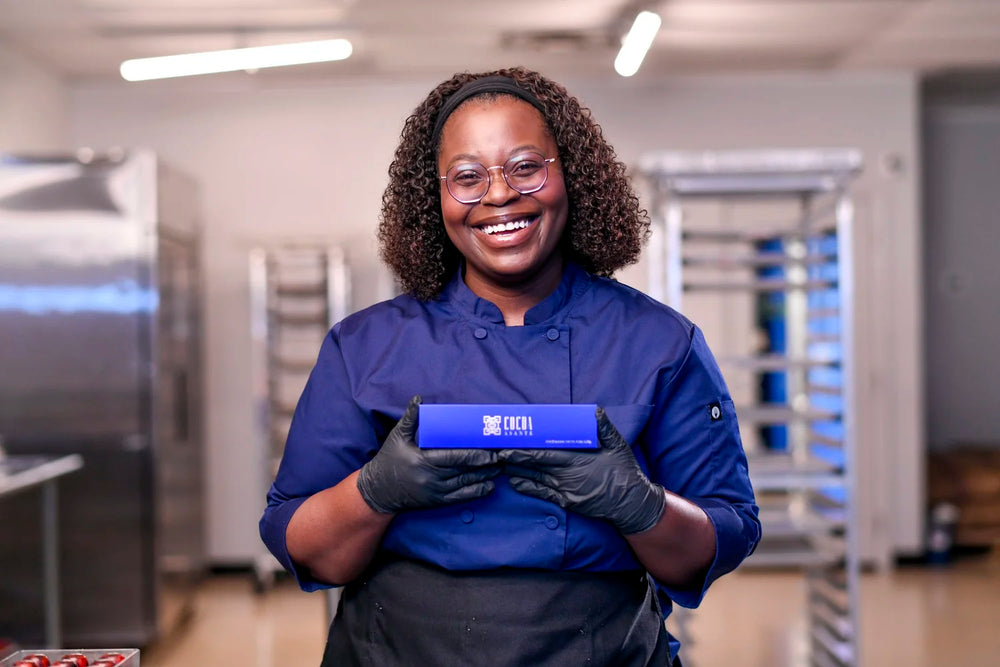
Ella Livingston was born in Ghana, into a family that has farmed cacao for generations.
West Africa grows roughly 70% of the world's cacao, and Ghana is the second-largest producer on earth. Yet most of the chocolate story gets told, and most of the value gets kept, an ocean away. Ella grew up inside that gap.
She was three when her family immigrated to the States. She became a high school math teacher, with a degree from Spelman and a minor in Japan Studies. The minor is what changed everything.
In 2013, in a Tokyo chocolate shop, the employees bowed and she bowed back. She carried the box home to her dorm room and opened it slowly: gold accents, a tiny fork tucked inside. It took her breath away. Chocolate could be reverent. It could carry culture and craft and intention in a single bite. And her own family had been growing cacao for generations, from an origin no one had bothered to celebrate.
She started Cocoa Asante in her home kitchen in 2018 to close that gap. She named it after her people. Asante is one of the great tribes of Ghana, and when Ella named her company, she named herself.
"Asante is my tribe."
Today the company is scaling toward manufacturing in Ghana itself, so the roasting, grinding, and value stay where the cacao grows.
The road so far
Ghana
A family that has farmed cacao for generations.
2013
A chocolate shop in Tokyo. A gold box and a tiny fork. Everything changes.
2018
Founded in a home kitchen in Chattanooga. First-year revenue: $660. She kept going.
2023
Keith Lee's 9.5/10. Sold out in under 45 minutes. $24,719 in 36 hours. CNN International calls the next week.
Now
16,000+ customers, 4.8 stars, $1.5M raised from community investors.
Next
Scaling toward vertical integration, manufacturing semi-finished goods in Ghana.
2,200+ farmers. One origin.
We source from Three Mountains Cocoa co-op through Cocoa Latitudes in Asante Akim — the same Asante the company is named for — where 2,200+ farmers earn a living income for their harvest. Oxfam estimates up to 90% of Ghanaian cocoa farmers don't, surviving on about $2 a day. That's the gap we exist to close, from bean to box.
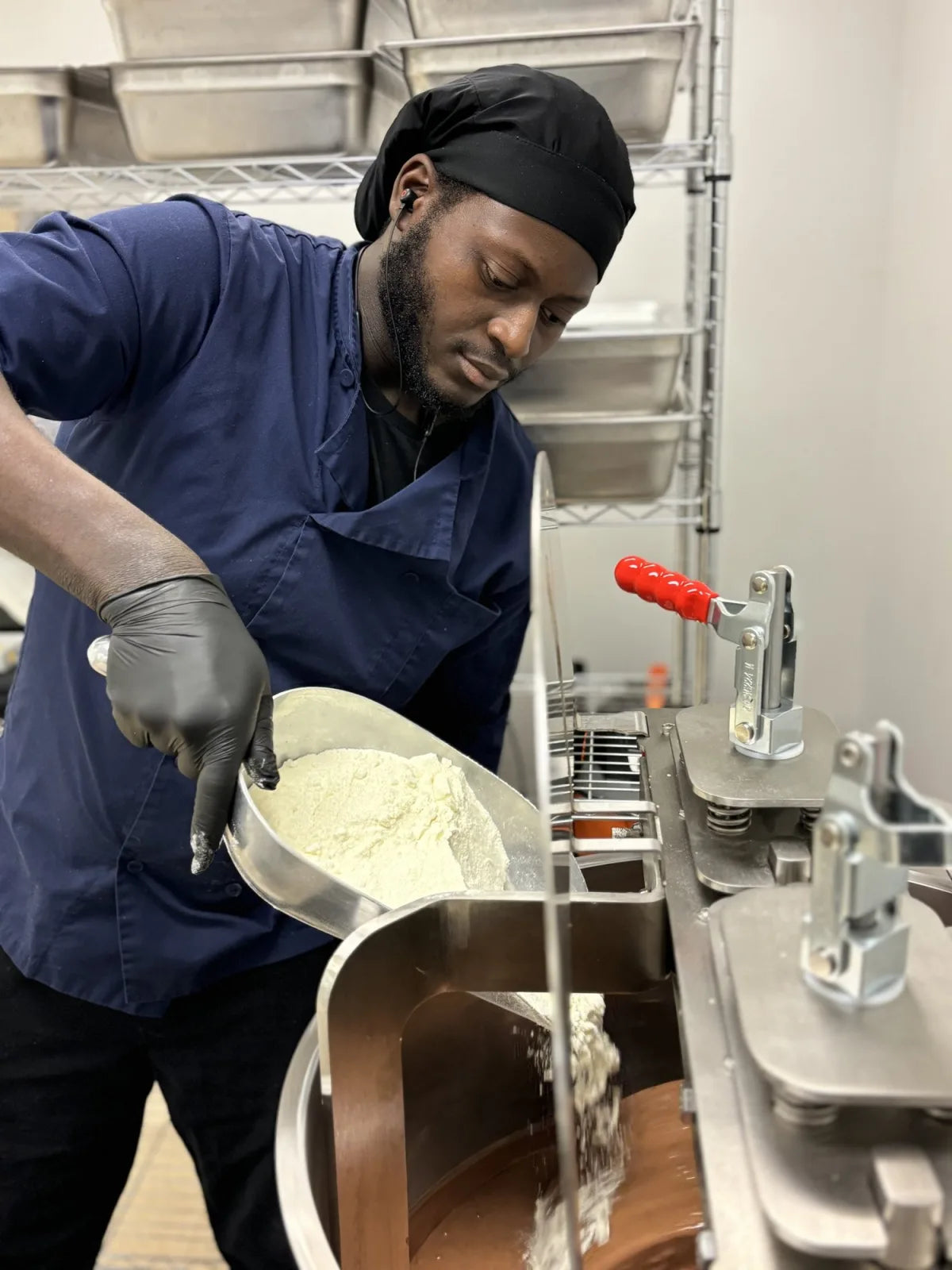
Stone-ground for 5 to 6 days. 15 to 18 microns.
That's twice as fine as the US standard, the difference you feel as the snap and taste as the melt. Every bar and bonbon is made bean-to-bar in Chattanooga, from cacao we roast, crack, winnow, and grind ourselves. The bonbons come out almost too pretty to eat.
Meet the team
-

Ella Livingston
Founder & Chocolatier · born in GhanaBorn in Ghana into a family that has farmed cacao for generations, Ella taught high school math before a 2013 trip to Tokyo showed her what chocolate could be. She started Cocoa Asante in her home kitchen in 2018 and named it for her people.
-

Sarah McCallie
Head ChocolatierSarah shapes what happens after the grind. She leads the bonbon and bar work in the Chattanooga kitchen, tempering and finishing each batch into the pieces that go in the box.
-

Kofi
Head of Bean-to-Bar DevelopmentKofi runs the bean-to-bar side in Chattanooga — the roasting, cracking, and winnowing, and the five to six days of stone-grinding that take every batch down to 15 to 18 microns.


Taste the story for yourself.
Shop ChocolateQuestions, answered.
Sourcing, making, and what ethical really means.
Sourcing & making
Where does your cacao come from?
We source from Three Mountains Cocoa in Ghana, a co-op of more than 2,200 farmers who earn fair pay, through Cocoa Latitudes. We are also working toward sourcing from our founder's family farm in Ghana.
What does bean-to-bar mean?
We control every step, from the beans to the finished bar. We roast, crack, winnow, and stone-grind the cacao ourselves in Chattanooga, which brings out the full range of flavor that mass-produced chocolate cannot.
What makes your sourcing ethical?
Fair pay at every step, organic and Fair Trade certified cacao, and permaculture farming that supports the land and local communities. In an industry where many farmers do not earn a living wage, we hold a higher standard.
Are the other ingredients sourced with care too?
Yes. Our bonbons often use ingredients from local, minority, women, and veteran owned businesses, so every piece supports diverse communities.